

Millions of people postpone rest, happiness, relationships, and their own personal projects until the right moment arrives. Neuroscience, well-being psychology, and stress medicine are beginning to show that this permanent state of waiting does not just transform the mind: it also leaves a measurable mark on the body.
By Ehab Soltan
HoyLunes – Carlos is 47 years old. He has been saying the exact same phrase for fifteen years: “When I finish this project…”, “When I pay off the mortgage…”, “When the children grow up…”, “When I have more money…”, “When the right time comes…”.
What Carlos has never asked himself, while crossing off days on the calendar with the urgency of someone fleeing a fire, is whether that moment actually exists.
If you are reading this, it is highly probable that you are Carlos too. Perhaps you do not share his age or his profession, but you do share his grammar. That conditioned syntax where happiness, rest, self-care, or simple disconnection are not present realities, but rewards to be claimed after crossing a finish line that moves one kilometer away every time you get close to it.
How much of your life have you spent preparing to live instead of living? This is not a rhetorical or poetic question; it is an existential wound that almost every contemporary citizen recognizes in the silence of their pillow. We live in a culture that has normalized the anteroom. We have become specialists in preparation and illiterates in presence, trapped in a human question that today directly challenges modern medicine: How many people live waiting to start living? The question seems philosophical, but more and more researchers suspect that it also has biological consequences.
“We have become specialists in preparation and illiterates in presence, trapped in a culture that has normalized the anteroom of life”.
The Syndrome That Does Not Appear in Manuals
If you open the *Diagnostic and Statistical Manual of Mental Disorders* (DSM-5), you will not find Deferred Life Syndrome (DLS). It does not have a medical billing code or an associated designer drug. However, in primary care and clinical psychology consultations, it is the elephant in the room.
The concept, originally coined in transpersonal psychology and cross-cultural studies to describe the existential paralysis of populations trapped in an economic survival loop, has been used to describe a neurocognitive and behavioral tendency to systematically postpone experiences of self-actualization, well-being, and enjoyment, under the premise that current prerequisites have not yet been met.
We are not facing simple procrastination. Nor is it equivalent to a depressive or anxiety disorder, although it can coexist with both. Its distinguishing feature is the persistent conviction that authentic life will begin at a future stage. Someone who procrastinates postpones an unpleasant task; someone who defers life postpones their own existence. It is a dysfunctional adaptive pattern where the individual externalizes their well-being and places it in a hypothetical future scenario, turning the present into a mere formality or, worse still, an obstacle to be overcome. The danger lies in its invisibility: unlike other mental health crises, DLS is socially rewarded. It camouflages itself under the ethical labels of “responsibility”, “ambition”, “sacrifice”, or “productivity”, making millions of people consider it completely normal to spend decades inhabiting a mental space of permanent postponement.

The Brain That Always Lives in the Future: The Hijacking of Dopamine
To understand why we fall into this existential trap, we must look at the neurobiology of expectation. Evolutionarily, the ability to postpone immediate gratification —what in psychology is known as delayed gratification— represented a colossal adaptive advantage. The hominid who was capable of not eating all the seeds today in order to sow and harvest them tomorrow multiplied their survival options. Our brain is designed to plan for tomorrow.
The problem arises when this advantage becomes pathological and the brain enters a permanent state of “not yet”.
▶ [ Future Projection ] ─── ▷ [ Anticipatory Dopamine ] ─── ▷ ──✘ [ Emptiness in the Present ]
From a neuroscientific perspective, this pattern can be interpreted as an overuse of the circuits associated with anticipation and future reward. Dopamine is not the neurotransmitter of pleasure, but rather that of the anticipation of pleasure. It is the molecule of pursuit, of motivation, of movement toward the objective. In the individual who defers life, the greatest release of dopamine occurs during anticipatory reward: the idealization of vacations, the planning of a promotion, the fantasy of retirement.
When the brain turns the future into the only territory where it believes happiness is authorized, a phenomenon of habituation occurs. The present becomes chronically unsatisfactory because the nervous system becomes addicted to the expectation, not the achievement. We spend our days consuming tomorrow in the form of a mental fantasy, desensitizing the receptors that would allow us to experience satisfaction with the daily stimuli of today. Tomorrow becomes a psychological drug. The paradox is that the capacity to plan, one of the greatest human cognitive strengths, can transform into a source of suffering when it systematically displaces the experience of the present.
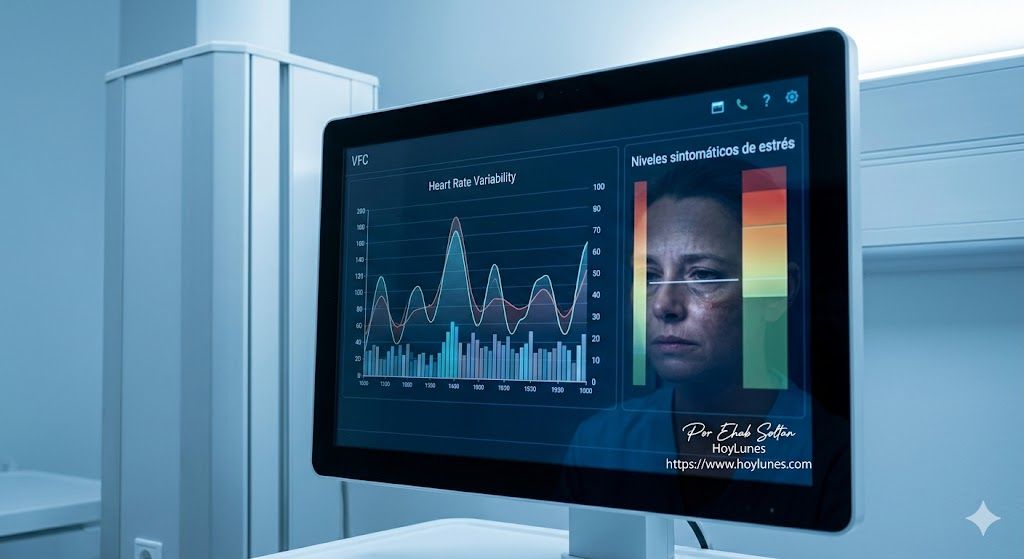
The Biological Cost of Waiting: The Physiology of Tomorrow
While the mind travels placidly toward that idyllic future where “everything will be resolved”, the physical body is left behind, anchored in the present, paying the biological bill for the wait.
Keeping life on hold requires a constant state of alertness. It is not the acute, traumatic stress of someone dodging a speeding vehicle; it is a chronic, low-intensity stress, that daily, silent, and subtle friction that medicine terms allostatic load. Researchers use precisely the concept of allostatic load to describe how small tensions maintained over years can produce a cumulative biological wear and tear superior to that of isolated episodes of intense stress. Allostatic load is the accumulated wear suffered by tissues and biological systems when subjected to prolonged physiological activation due to environmental demands or, in this case, the internal tension of living in one place while wishing to be in another.
When you spend years telling yourself that you will rest “when the project ends”, your hypothalamic-pituitary-adrenal (HPA) axis does not understand corporate deadlines. For your adrenal glands, the promise of a future truce is irrelevant; the only real thing is the sustained secretion of cortisol and catecholamines in the present.
Scientific literature is implacable in connecting this state of contained tension with systemic organic deterioration:
Cardiovascular Health: Continuous endothelial activation and increased peripheral vascular resistance silently raise the risk of hypertension and acute coronary events. The heart does not relax with your retirement plans.
Low-Grade Systemic Inflammation: Chronically elevated cortisol loses its immunomodulatory capacity, triggering a cascade of pro-inflammatory cytokines that damage tissues at a cellular level.
Immunological Alterations: The body prioritizes resources for “immediate survival” (delivering the report, paying the debt), depressing the efficacy of lymphocytes and increasing susceptibility to infections and autoimmune pathologies.
Sleep Architecture: The neurocognitive inability to deactivate the “future pursuit” mode fragments deep sleep and blocks the REM phase, preventing brain restoration and memory consolidation.
How many bodies are paying the biological price today, in cardiology or oncology waiting rooms, for a life that its owner has decided will only begin tomorrow? The human organism does not have the capacity to archive stress in a bank account waiting to be cleared during vacation. The body always collects its bills in real time. Biology has an uncomfortable characteristic: it does not distinguish between a real threat and a permanently postponed life. It only responds to that which it perceives repeatedly.
“Biology has an uncomfortable characteristic: it does not distinguish between a real threat to survival and a life that is permanently postponed”.
The Paradox of Success and the Fallacy of “I Will Be Happy When…”
There is a tragic turning point in the biography of those who suffer from this syndrome, a head-on collision that the psychology of well-being analyzes with special fascination: The Paradox of Success.
It occurs when the individual achieves, after years of postponement and sacrifice, exactly what they were pursuing. Carlos pays off the mortgage. For years, he imagined that day as an emotional frontier. Upon crossing it, he discovered that the feeling of relief barely lasted a few weeks. He gets the partner position. The children go to university. The bank balance reaches the mythical figure that was supposedly meant to inaugurate his existence. And then, instead of the promised peace, an echoing emptiness breaks in.
This emptiness is the clinical manifestation of hedonic adaptation, the biological tendency of human beings to quickly return to a baseline level of emotional stability after experiencing positive events. But in DLS, a structural trap is added: because the brain has spent decades training exclusively in the mechanism of postponement, it has lost the functional capacity to inhabit achievement. It does not mean that achievements lack value. It means that no achievement can substitute the daily capacity to experience satisfaction, connection, or meaning.
The individual does not know what to do with the conquered present because their mental architecture only knows how to process the eve. The automatic response? To build a new postponement. A bigger house, a new investment fund, another corporate goal. The loop resets.
“I achieved exactly what I believed would give me the freedom to start living, only to discover that I had forgotten how to live. My mind rejected the calm and demanded the next goal like an addict demands a dose”.
Research on subjective well-being has systematically dismantled the linear equation “Success ──> Happiness”. The data shows that life satisfaction is not the byproduct of a great future milestone, but an emergent property of the quality of our current daily experiences: the strength of our meaningful relationships, the presence of a vital purpose that gives meaning to the day-to-day, and the capacity for active participation in the small rituals of routine. Happiness is not a destination arrived at after solving all problems; it is the ability to experience life while problems are being solved.

What the Science of Longevity and Regret Teaches Us
As medicine and gerontology advance, the definition of healthcare success is shifting from quantity to quality. We are no longer just interested in life expectancy (how many years we accumulate), but in health expectancy (how many of those years we live free of chronic disease and with emotional fulfillment). And it is precisely in the final stage of life where Deferred Life Syndrome reveals its true face.
Dr. Laura Carstensen’s Socioemotional Selectivity Theory at Stanford University demonstrates that the perception of time drastically alters our priorities. When we are young and perceive the future as infinite, we tend to prioritize goals oriented toward knowledge, accumulation, status, and preparation (open time horizons). However, as we age and the time horizon narrows, the brain naturally prioritizes present emotional goals, deep relationships, and immediate well-being.
The drama of DLS is that it forces people to maintain an artificially open time horizon throughout their entire maturity, forcing the brain to accumulate and prepare until, suddenly, the horizon closes due to a diagnosis, an accident, or simple aging.
Various studies on aging and the end of life show a recurrent pattern: older adults rarely regret having worked too hard on a specific Tuesday or having lost a minor financial opportunity. What appears most frequently are postponed experiences, neglected relationships, and personal projects deferred indefinitely. At the end of the journey, in the balances struck at 80 or 90 years old, the mind does not value completed projects or the sacrifices that kept us absent from our loved ones. What is regretted is having operated under the illusion of infinite time. The science of longevity tells us that delaying life is not a prudent strategy for managing the future; it is a definitive amputation of the only real time we possess.
Perhaps the greatest public health risk of our century is not elevated cholesterol, excess blood sugar, or spikes in blood pressure. The real danger, the one that wears down biological systems in silence, is the subtle inertia of spending one’s existence in a waiting room.
If everything that grants meaning to your biography is programmed to open only when the next crisis is resolved or the next goal is reached, the calendar becomes an implacable enemy. In the end, it is not about counting the days we have left ahead of us. It is about looking back and discovering if we were actually there while they were happening. Upon turning off the screen and returning to your routine, the only question that truly matters remains floating in the air: How many years have we been waiting for permission to start living?
#MentalHealth #WellBeing #Neuroscience #Psychology #ChronicStress #Longevity #QualityOfLife #DeferredLife #Health #HoyLunes #EhabSoltan